Jack Savoretti on the Art of Driving, Music and Motorsport
The British-Italian musician reflects on the cars, sounds and experiences that shaped his life, and the shared creative spirit connecting music and automotive culture.

A car is rarely just a means of getting from one place to another. It's a vessel for memories, a reflection of personal identity and, for many, a space where music takes on an entirely different meaning. From the soundtrack accompanying an open-road escape to the vehicles that define particular chapters of our lives, automobiles have long occupied a unique place in popular culture.
For British-Italian singer-songwriter Jack Savoretti, that relationship is especially personal. With a career spanning two decades, the musician has developed an appreciation for the ways sound, movement and memory intersect. His latest album, We Will Always Be The Way We Were, explores similar territory, examining the passage of time while rediscovering the same youthful energy that first drove his creative ambitions. "The album is a recognition of arriving at midlife. You take stock of what has been and look back whilst having plenty of road ahead," Savoretti explains. "I no longer want to be nostalgic about my younger years, but I want to reinvigorate and recapture my youth through that feeling of hunger, energy and a renewed sense of excitement for everything life throws in my direction."
It's a sentiment that feels particularly relevant to automotive culture, where machines can carry decades of personal history while continuing to inspire new experiences. Certain cars become inseparable from the moments spent behind their wheels, serving as physical reminders of places, people and experiences. For Savoretti, one vehicle in particular stands out: the Jeep Wrangler Wagoneer. "It's the car I drove on my first road trip across the Mediterranean," he recalls. "It's forever ingrained in my memory."
The connection between automobiles and music extends beyond nostalgia. A car offers one of the few environments where a soundtrack can become completely intertwined with the surrounding landscape. Savoretti points to two tracks from his latest record that capture these contrasting experiences. For scenic journeys, he recommends "The Making Of You," describing its cinematic progression as a soundtrack to watching the world pass by. Meanwhile, the album's energetic title track is better suited to the frustrations of urban congestion.
"The car is the best place to listen to music," he says, naming Led Zeppelin's "Whole Lotta Love" as his current go-to sing-along. His experiences driving through Oxfordshire and London also highlight how the environment changes our relationship with sound. While the former offers the freedom to enjoy the road, the latter's bumper-to-bumper traffic encourages a different kind of listening.
That interplay between a vehicle, its environment and the person behind the wheel is central to CART Dept's exploration of automotive culture. Cars exist at the intersection of design, art, music and individual expression, evolving beyond their functional purpose to become cultural objects with stories of their own.

It's a perspective that also extends to motorsport, where engineering and performance meet spectacle, creativity and collective ambition. As an admirer of Formula 1, Savoretti sees parallels between the intense coordination behind a racing team and the collaborative process of making music. "It's the absolute pinnacle of performance, from the driver to the strategists and mechanics," he explains. "In order to win, it's a complete team effort, with everyone bringing their A game. I love the level of complexity."
For Savoretti, the relationship between motorsport and music comes down to two defining qualities: "Definitely the craftsmanship and adrenaline. It's why, when paired well, they go together so well."
His favorite race, the Monaco Grand Prix, further illustrates this crossover. Beyond the competition itself, Monaco represents a convergence of automotive history, architecture, fashion and entertainment, transforming the city into a cultural stage as much as a racing circuit. Savoretti describes its appeal simply: "It's got it all: the beauty, the glamour, the drama, the history."
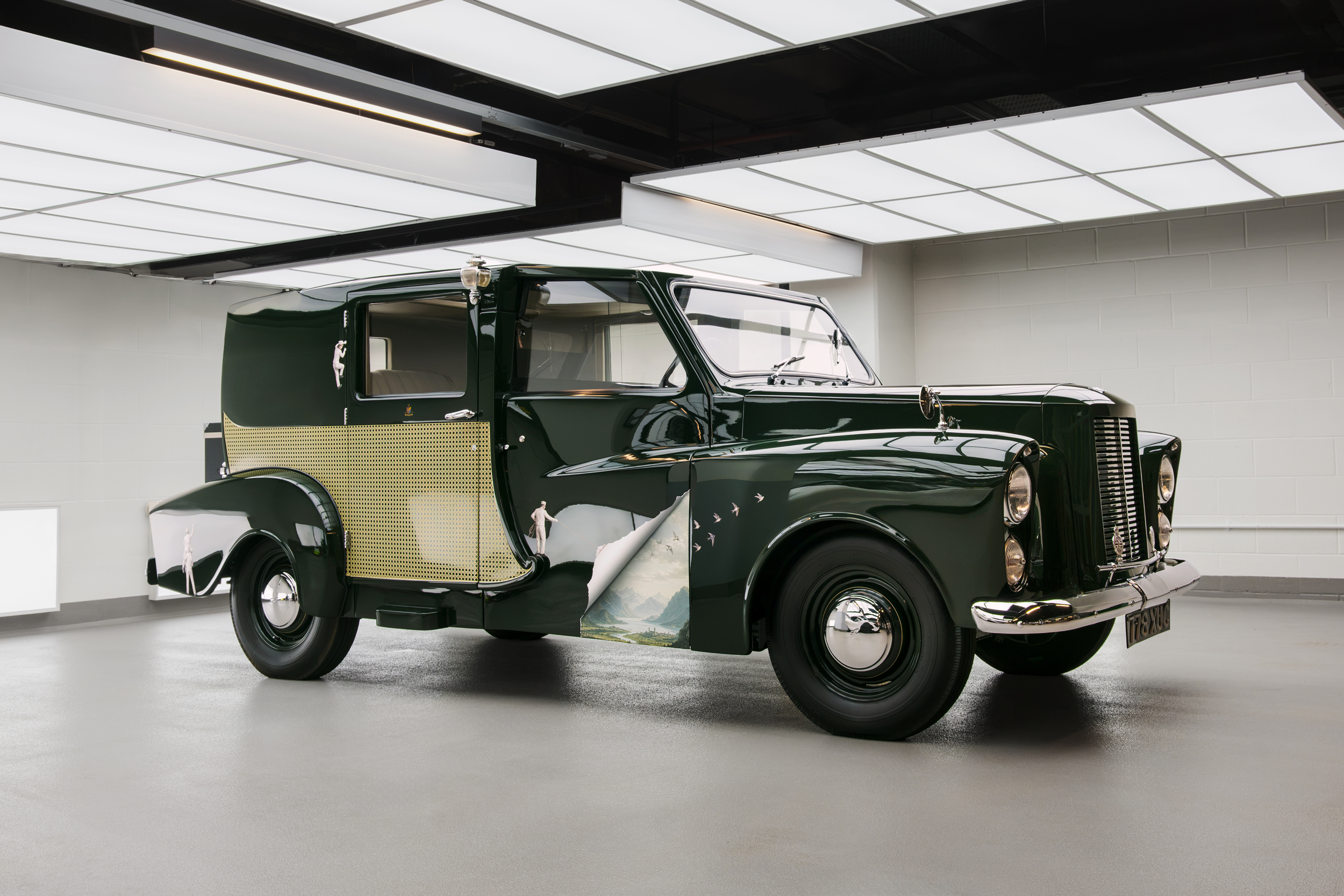
The musician also recognizes the artistic potential of the automobile as a canvas. Asked which artist he'd commission to paint a car, his answer is immediate: his wife, Jemma Powell. It's a personal choice that speaks to the creative possibilities of automotive design, where individual perspectives can transform familiar machines into something entirely new. Whether preparing for a live performance or reflecting on the precision of Formula 1, Savoretti returns to the importance of craft and collaboration. Before taking the stage, he prefers quiet moments in his dressing room, followed by an a cappella warm-up with his band. It's a ritual that echoes the preparation required of a racing team before the lights go out.
Ultimately, Savoretti's relationship with cars reflects a broader understanding of automotive culture: that the stories surrounding a vehicle can be just as meaningful as the machine itself. From a Mediterranean road trip to the spectacle of Monaco, the experiences that stay with us are shaped by movement, music and the people sharing the journey. And much like the message behind We Will Always Be The Way We Were, the road ahead offers an opportunity not simply to revisit the past, but to find new reasons to keep moving forward.
This feature was produced in partnership with Shoot Music, the sports-focused music promotions company founded by Tom Roberts in 2008, which partners with Formula 1 to curate official music experiences. Photography by Max Earey.