The Wired Wonders of Benedict Radcliffe
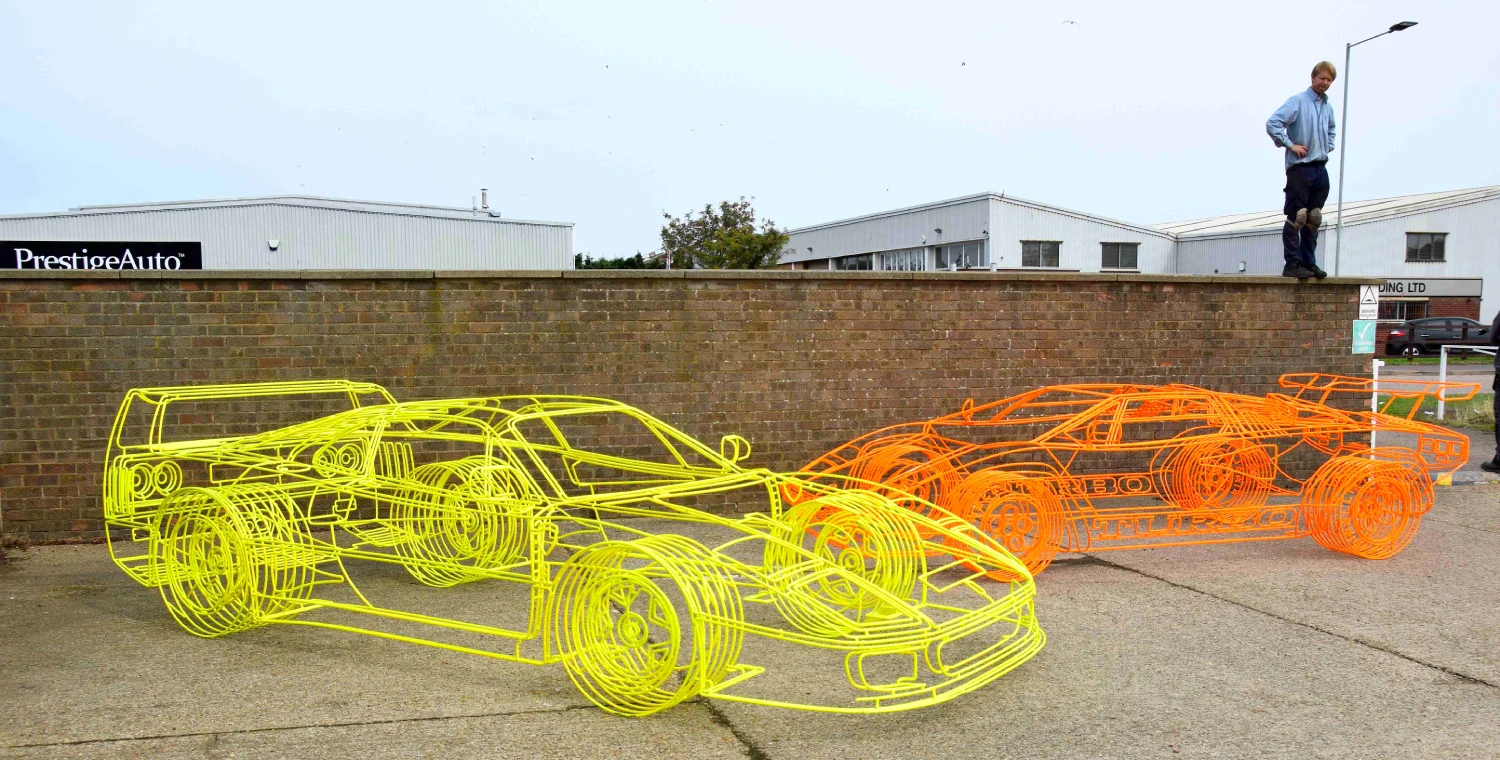
As an artist best known for his life-sized wireframe cars, you’d expect Benedict Radcliffe to be comfortably ensconced within the car world over the course of a 20-plus year career. But not quite like this.
The Kent native is fresh from off-the-beaten-track events like the Round Cat Rally, which took him around the Japanese countryside through Chiba and Sendai in a Spoon-prepped Honda S650. His friend Clark Sopper started the rally in 2019 to highlight Japan’s narrow-access country roads and design landmarks.
Before that, he was driving his dune buggies around Lake Como. The buggies are Radcliffe’s own design, decked out in orange and green wireframes that nod to classic American tubular sand rails. The green buggy sits lower and faster, powered by a hotted-up 1.9-liter VW flat-four, while the more compact orange version runs a 1.3-liter air-cooled flat-four.
He brought them to Como for Scuderia Nautilus, a lakeside meet of vintage boats and classic cars. Later on, he took them to Tutto Benne in Mottarone, an invite-only 8km run on the scenic Strada Borromea featuring rare and classic cars. Neither buggy is currently road-legal, but for the hopeful hobbyist, they are being auctioned as off-roading vehicles.
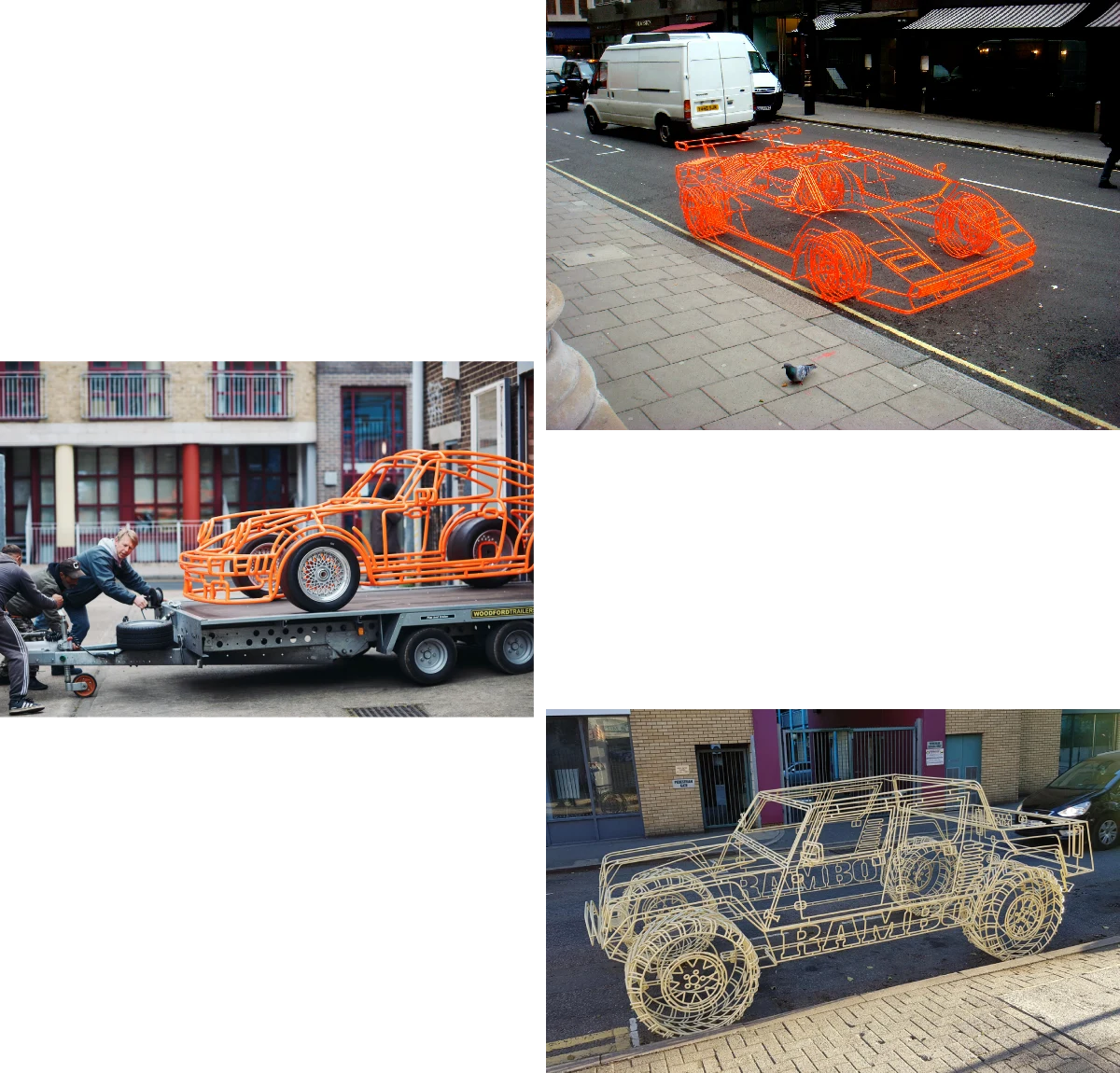
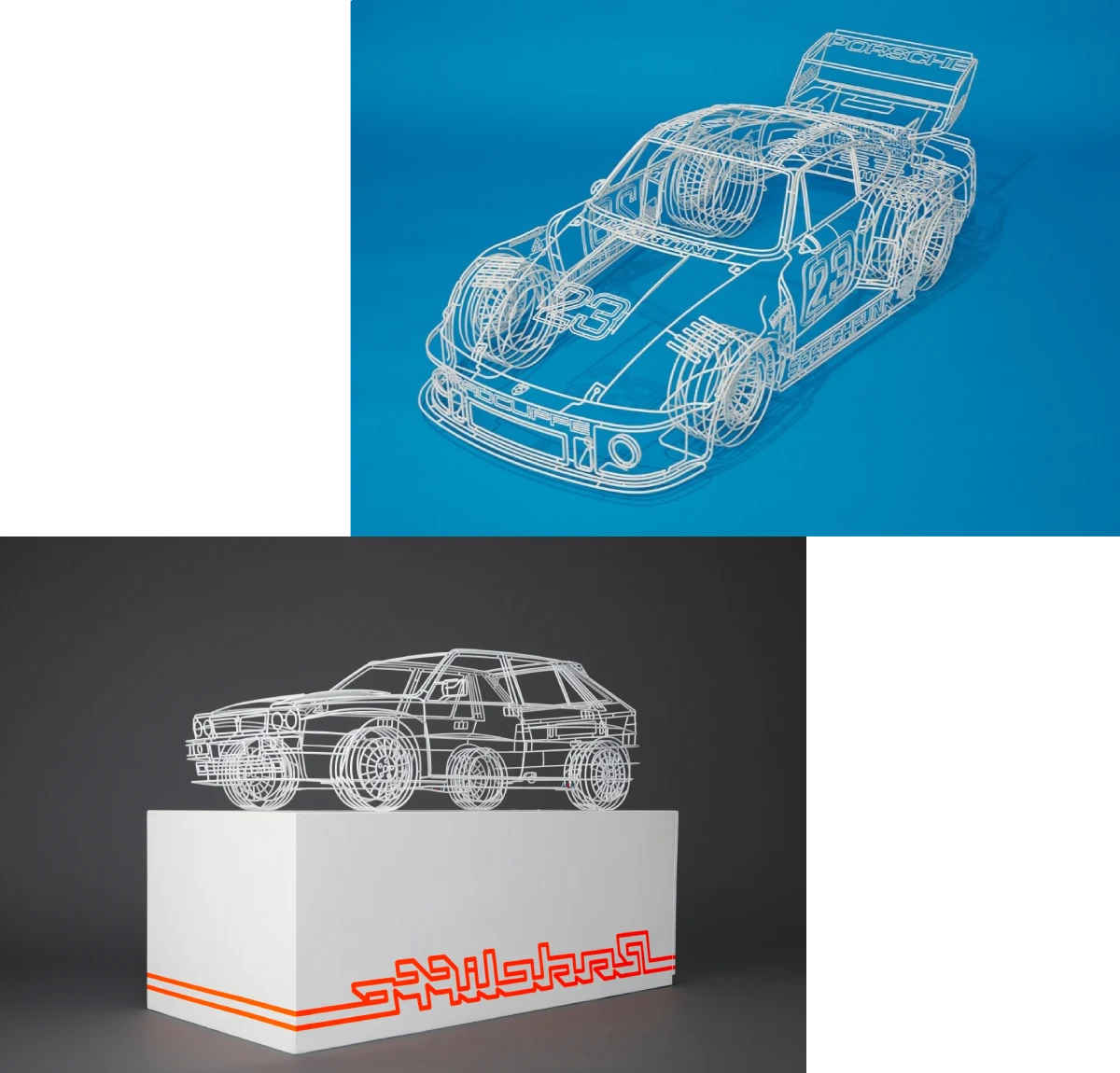
Some of Radcliffe’s most recognizable pieces include a wireframe Subaru Impreza, Lamborghini Countach, and Porsche 911. Beyond cars, he wants to experiment with other applications of the wireframe, with the dune buggies being a recent example. Upcoming projects include a line of heavyweight cotton workwear produced in the UK, new stainless-steel sculpture editions, and perhaps most ambitiously, drivable versions of his signature wireframe cars powered by discreet electric drivetrains.
The concept of a drivable sculpture highlights how utility often becomes the line between design and art. “It’s a funny one,” he says. ”The more arty [the cars] are, you can sell them as an abstract artwork, but if you put an engine in them, it sort of becomes less art and more product. But maybe that doesn’t matter.”
He doesn’t sound too fussed about it. What he does concern himself with, however, seems to be closer to the ground. We start chatting about the livery kit he produced out of reflective 3M wrap for a World Rally Blue 2005 WRX. As he launches headlong into a breakdown of the panel spacing down to the millimeter, I think of an offhand comment he made earlier on: “The details are the content.” The details are the whole work; or as they say, the devil is in the details.
Below, Radcliffe talks about his architect roots, his days as a burgeoning artist in Glasgow (where he bagged a Comme des Garçons gig, no less) and his nigh-unhealthy obsession with detail, from welding seams to cotton weight.
Clearly you’re a car guy. How did that all start?
My dad and uncle were into cars and anything mechanical. There would be three or four cars in the driveway, the garage was full of motorbikes, and you know, lawnmowers, chainsaws. And my dad would fix his own cars, my uncle’s cars, his friends.
So your early relationship with cars was more mechanical, right? Did that feed into your style of creating the wireframe?
My dad was very hands-on, and if he could repair it himself there was absolutely no way he would give his car to a garage. So I guess my work has a process to it which comes from seeing my dad repair stuff and weld stuff.
Your work is also architectural, almost.
That’s true. I studied architecture. But while I was studying [for my degree] I started working with an architectural fabrication company called Scott Associates because I needed some money. They taught me how to weld.
Then I apprenticed for the founder of that company called Andy Scott, who made these huge wireframe animal scultpures from steel rod. And I’m not really into animals, per se. I was just into cars. So I made my first car then, a Subaru Impreza, at his workshop, in the evenings after work as I didn’t have a workshop of my own. I called it Modern Japanese Classic, and eventually exhibited it at a well-known hotel in Glasgow
[I’m sure Scott] was looking at it going, I’m not sure how I feel about you biting my style. But he was very organic, and mine was a tighter kind of style, which came from years of studying architecture and the technical drawing stuff.
Then you decided to go into art full-time?
I stayed at Scott Associates for another couple of years after university. At the same time, I was fabricating work for other artists, and eventually I realized I was much happier physically making things than sitting in an office. By the time I was about 27, I thought: I can probably do this on my own.
How would you describe your current process?
Just doing things properly. If you go to a good body shop, you see the amount of work that goes into painting cars. It’s 95% prep, 5% painting. There’s an appreciation of craft and finish that is really matters to me. The details matter enormously. That forms a huge part of my practice. When I did the skate bowl using recycled timber from a building site, everything had to be lined up. You couldn’t put a bit of cigarette paper in between the joints.
You once said in a past interview, “If it’s easy, then something’s wrong.” Can you tell me how that applies in your practice?
I really envy artists like Keith Haring, or more recently, Slawn, who just have this incredible confidence of line. They can put a mark on a bit of paper, and it will represent something. My work is more process-driven. Every line in my sculptures involves metalworking, grinding, filling, sanding, prepping, painting. It’s extremely labour-intensive. It’s just unfortunately the way I’ve been working.
Is it also like that for your, for lack of a better word, “easier” projects? For example when doing merch?
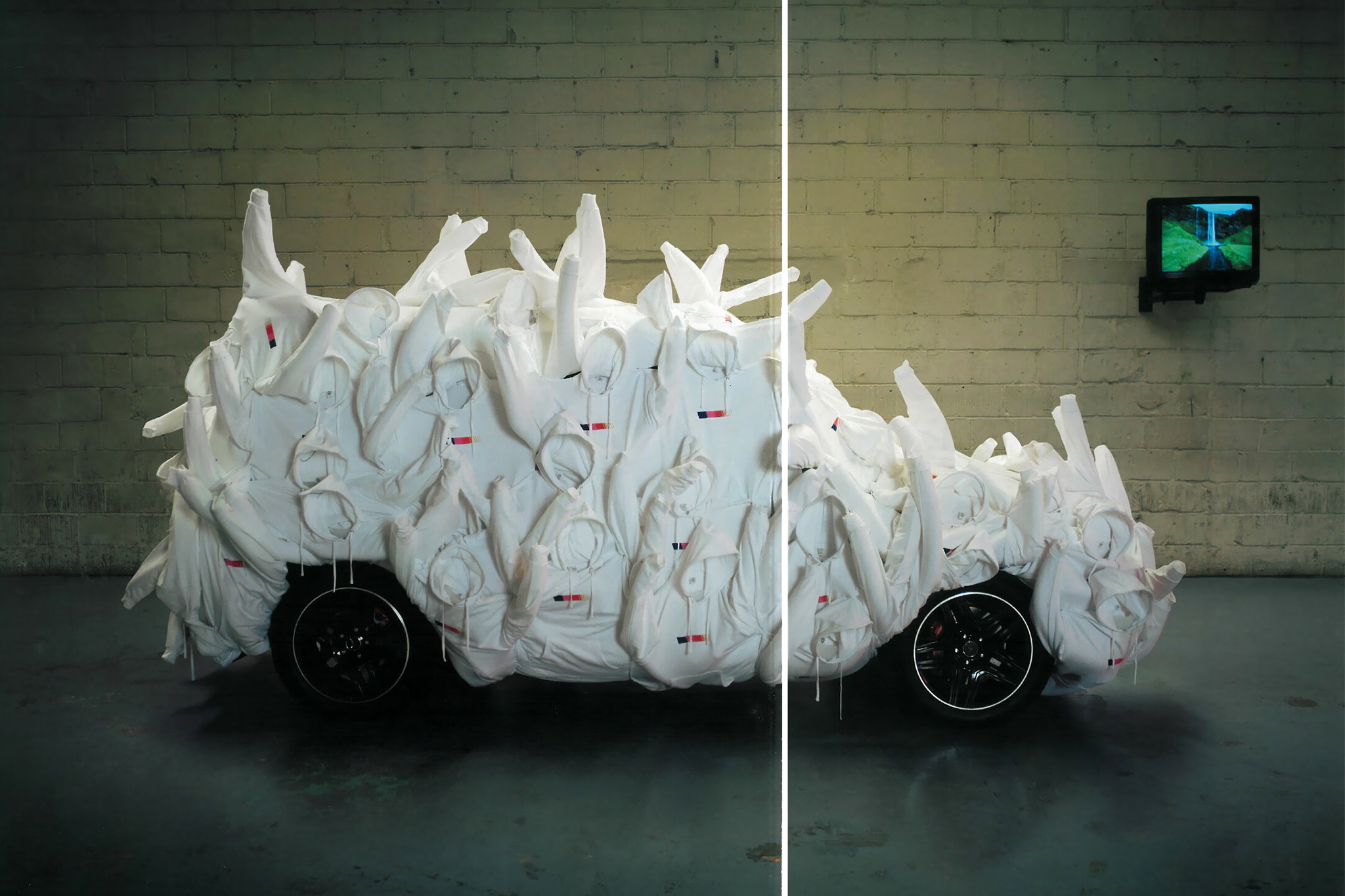
Totally. I’m really interested in the tactile element of clothing. When I was doing merch the past four or five years, I was using these beautiful, vintage, super heavy-cotton Russell Athletic hoodies. I would buy them from eBay and get my designs embroidered on them. That was really good, but then they became quite tricky to source actual, clean vintage hoodies that I could resell. And they became quite expensive. So I started buying new Russell blanks, but they were not the best quality. They weren't thick enough, and they were often cotton-poly blends which would start looking not too brilliant after two or three washes.
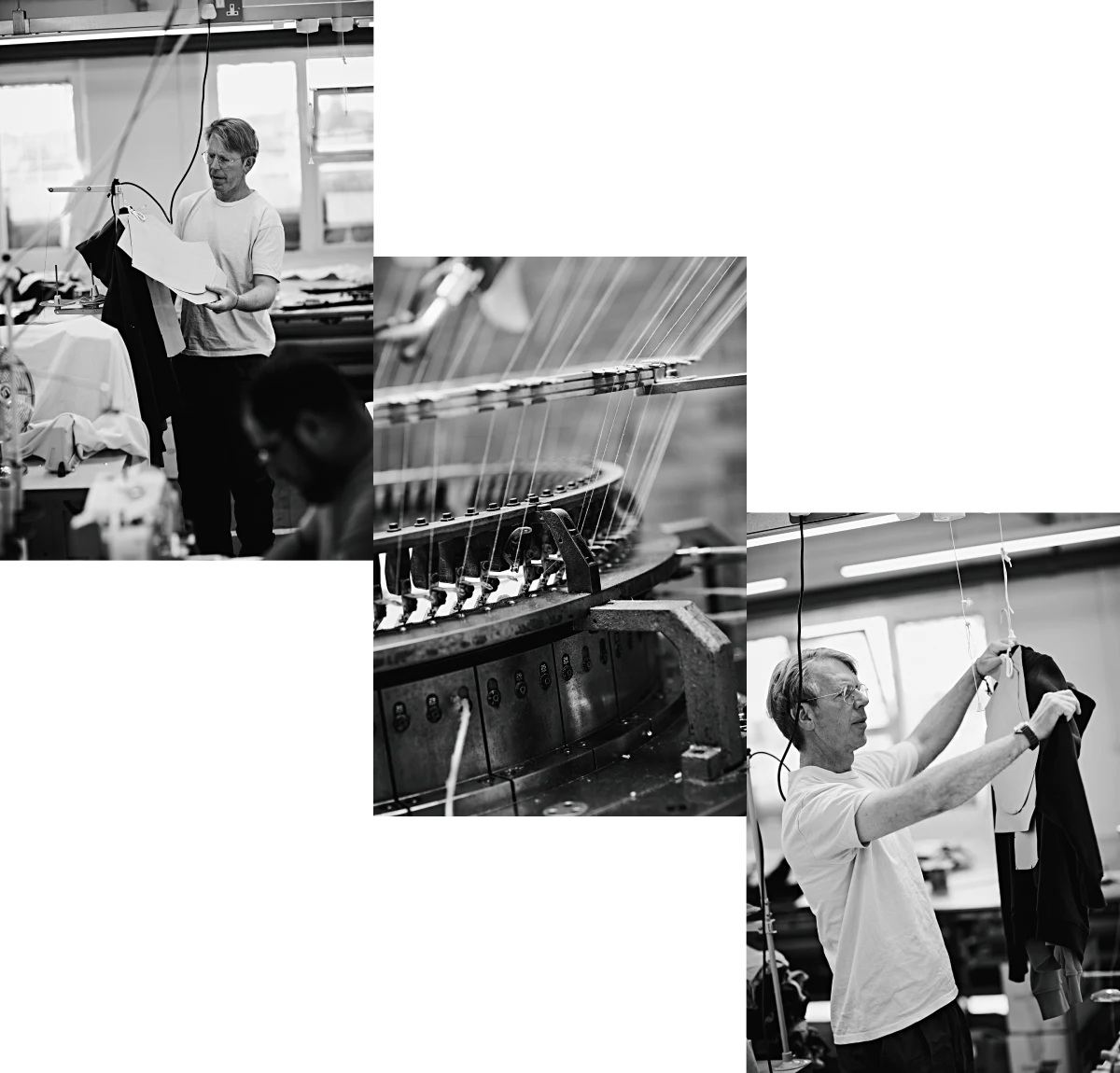
So about two years ago I decided to make my own blanks. Through a friend, I found a place that can spin this heavyweight 500 gsm loopback cotton on vintage German and Japanese spinning machines. This is in the north of England, where we used to have a massive clothing industry. They still haven’t been released yet, but we’re close.
What’s the story behind your CDG project?
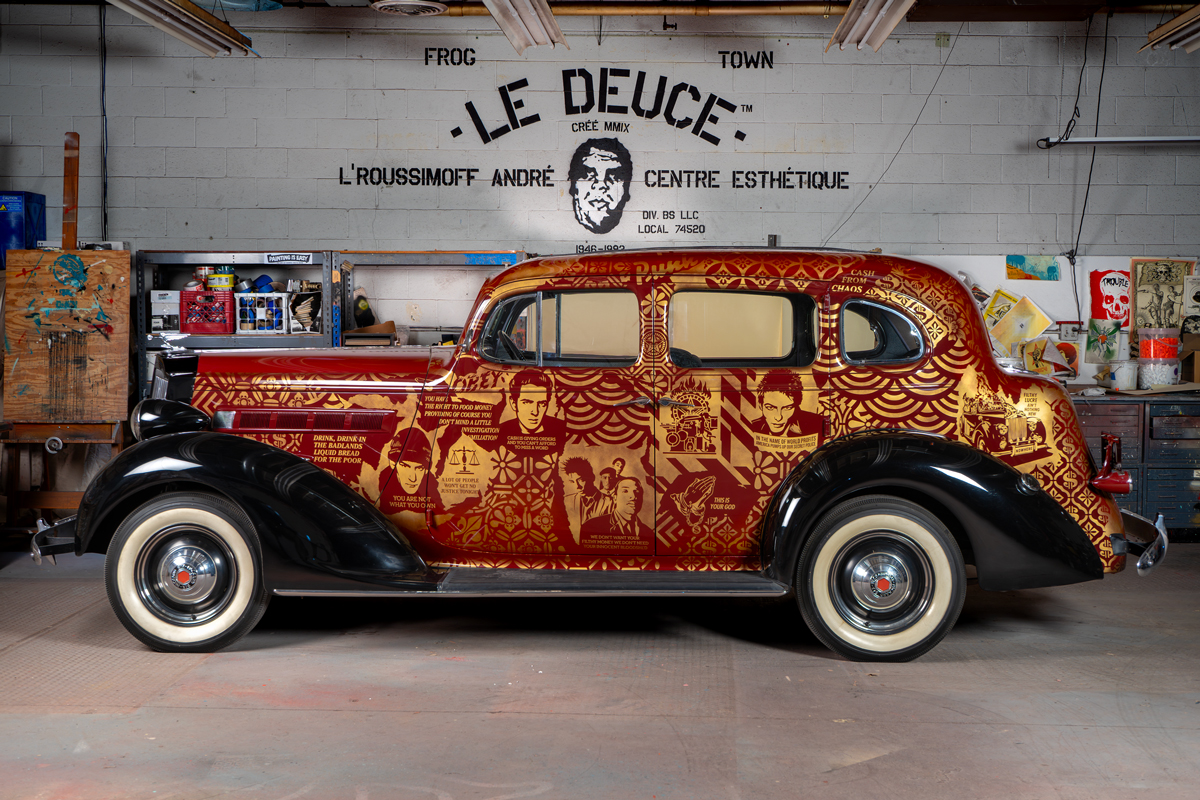
CDG had a pop-up in this warehouse in a really rundown part of Glasgow. And my friend who was running the shop needed some furniture. So I produced an extended bench from a Honda 90 [motorcycle], sourced from the motorcycle dismantlers next door, that people could sit and lie down on. There was this brilliant piece by Jim Lambie too, a white vintage Rolls-Royce wedding limousine covered in a paisley vinyl wrap. This was 25, maybe 30 years ago before Comme des Garçons became as massive as they are now.
What makes a great car to translate into wireframe?
Usually proportions and how the wheels sit within the arches. Spoilers are always fun to do. Wheels too. Cars like the Countach or the F40 have such iconic wheel designs that they become part of the car’s identity. That’s where you can really have fun with the line work.
.webp)
.webp)