A Look Inside ‘Keith Haring: On the Street’
CART Department re-anchored Keith Haring’s legacy in the West Village neighborhood that shaped it with Keith Haring: On the Street. The exhibition served as the public debut of Free Parking, a 3,000-square-foot gallery carved out of a restored 19th-century carriage house. By swinging open the massive original stable doors directly onto Morton Street, the space functioned as a literal extension of the sidewalk, removing the traditional barriers between the gallery and the public—a move that echoed Haring’s own philosophy of art belonging to everyone.
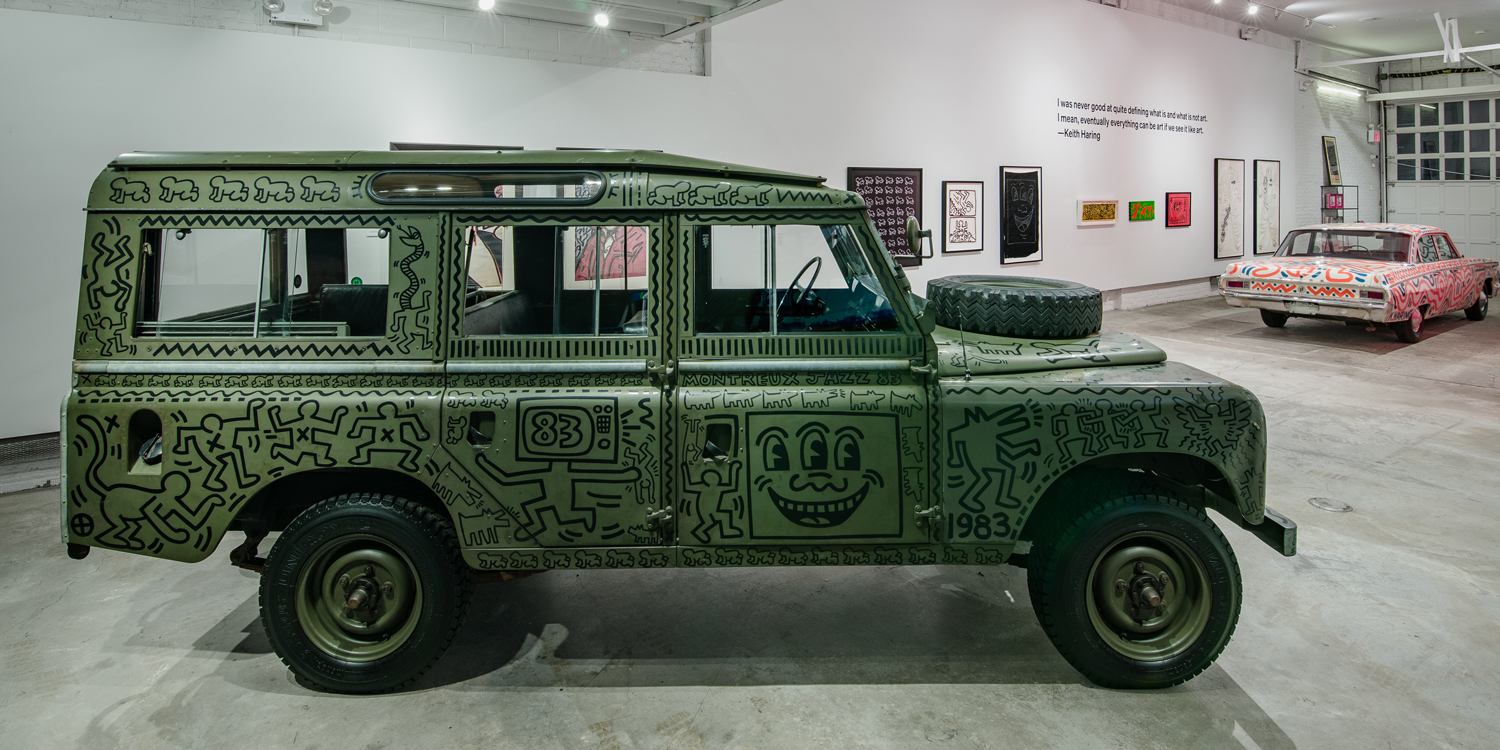
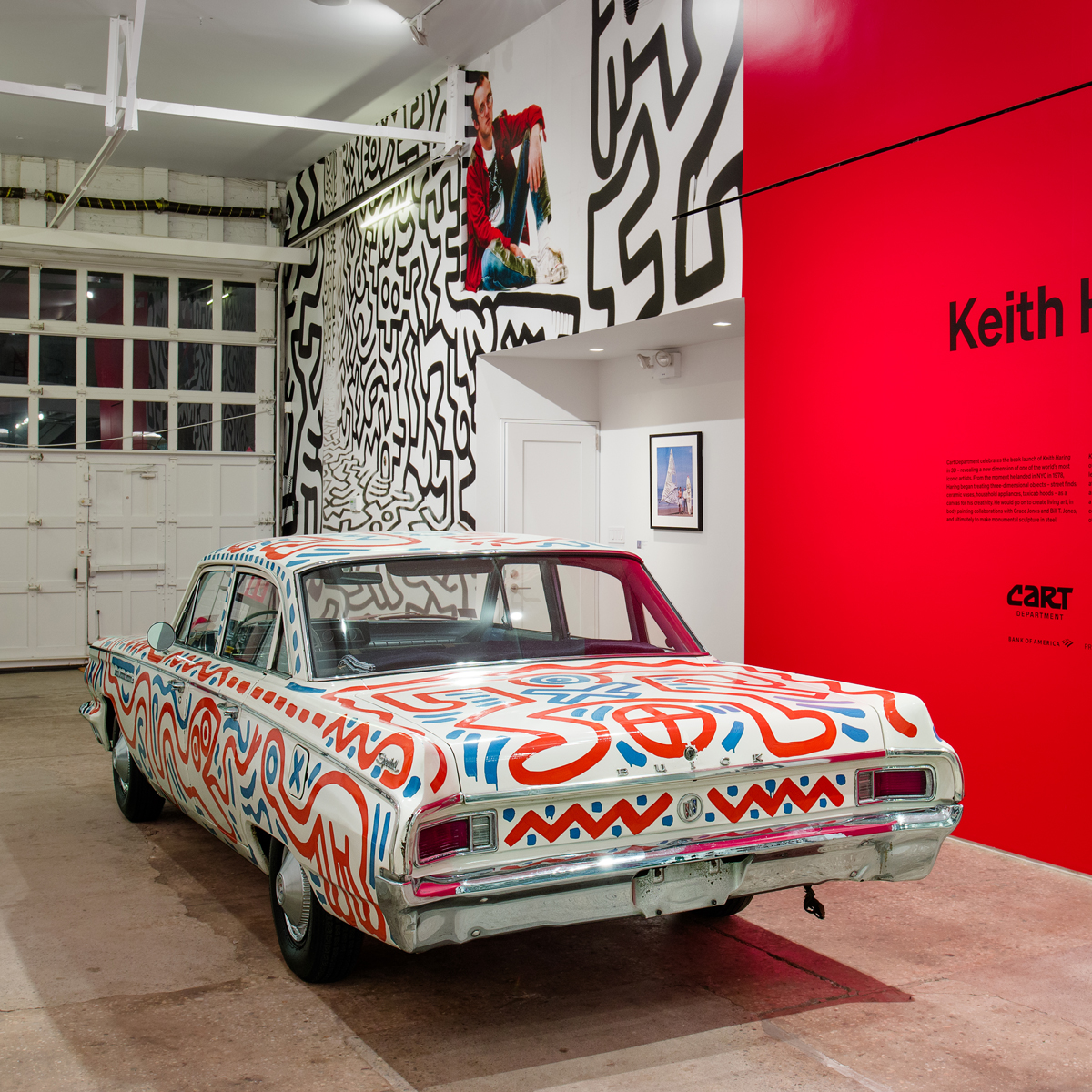
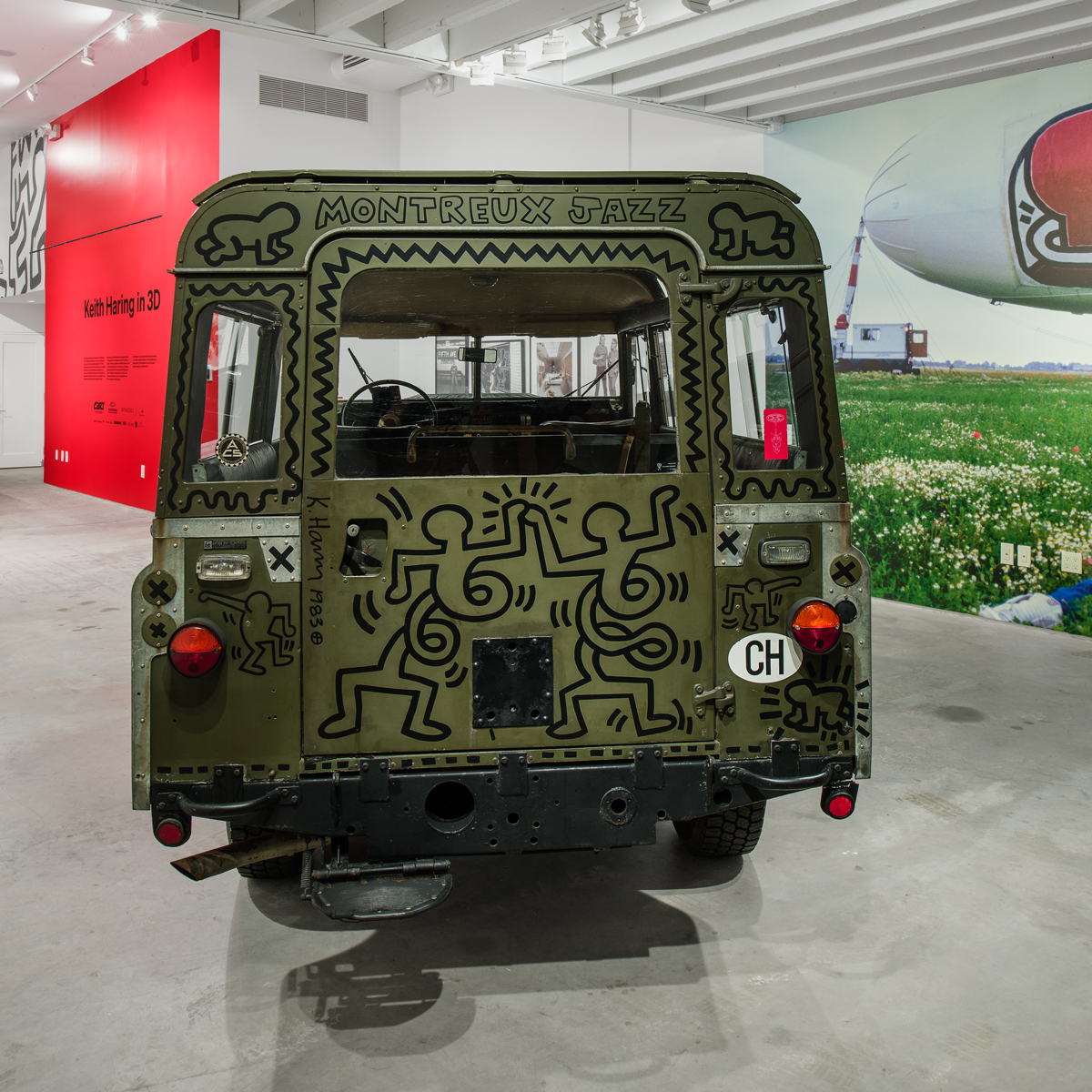
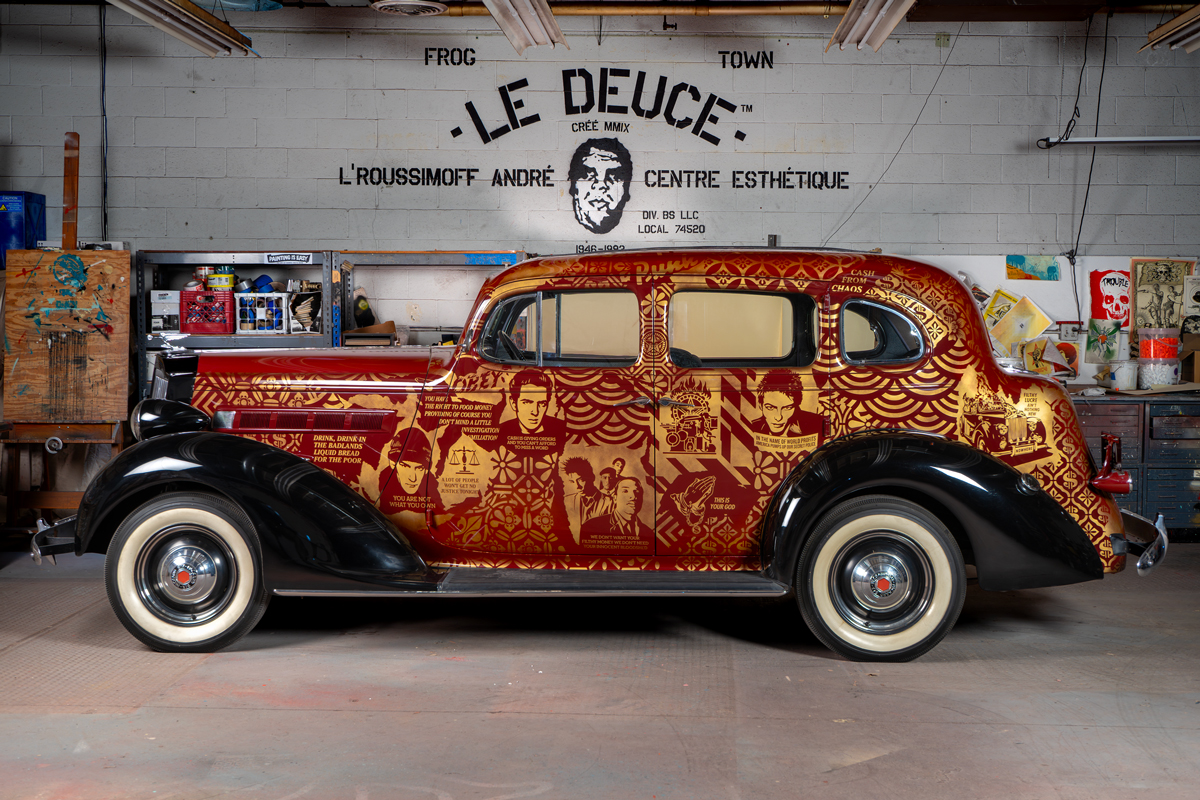
The physical anchors of the show were two of Haring’s most ambitious three-dimensional works, rarely seen together in a single Manhattan space. On view was the 1963 Buick Special, which Haring transformed in 1986 with his signature dense, rhythmic linework. Alongside it stood the 1971 Land Rover Series III, a rugged vehicle with deep historical roots, having been painted and debuted at the Montreux Jazz Festival in 1983. Seeing these vehicles parked within the carriage house offered a masterclass in how Haring’s iconography could colonize complex machinery, turning utilitarian transport into kinetic sculpture.

Beyond the art cars, the exhibition explored Haring’s multidisciplinary reach, specifically his intersection with the world of dance and performance. A major highlight was the presentation of original drawings Haring created in 1982 for Muna Tseng’s dance, Epochal Songs. These works were displayed alongside the iconic photography of Tseng Kwong Chi, capturing the frenetic, collaborative energy of the 1980s downtown scene. These pieces, along with a curated selection of original artworks and ephemera, provided the physical context for the research found in the new Phaidon (Monacelli) publication, Keith Haring in 3D. While the book aligns with a major institutional show opening at Crystal Bridges this summer, the Morton Street presentation offered an intimate, early look at the materials that informed the project.
The residency was bolstered by a public program featuring voices who lived through Haring's era and those carrying his influence forward. Conversations with Carlo McCormick, Muna Tseng, and Larry Warsh provided historical depth, while insights from Eric Shiner, Brad Gooch, and Marka27 explored his enduring impact on contemporary culture. The exhibition timing coincided with The Brant Foundation’s survey in the East Village, turning downtown New York into a broader survey of Haring's legacy. The week concluded with a dance party led by G-Bo The Pro, ensuring the carriage house stayed true to its origins as a space for movement and collective experience.
Keith Haring: On the Street was on view from April 10–19, 2026 at 16 Morton Street in NYC.
.webp)
.webp)